
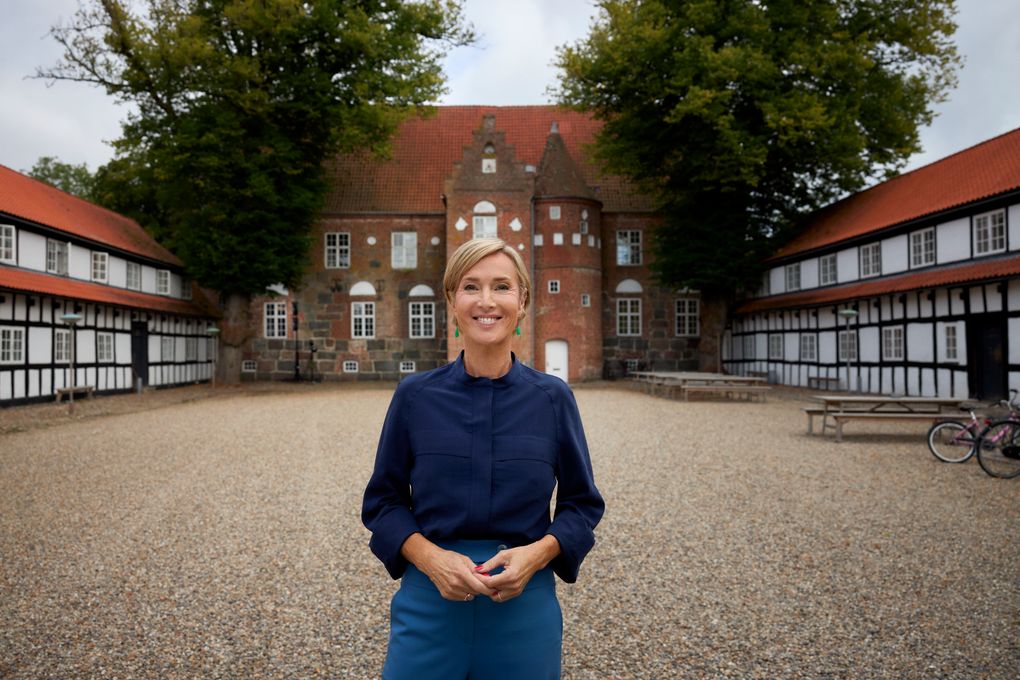
The Danish reality-debate programme Højskolen on TV 2 will air an episode tonight exploring what it means to be Danish and well integrated.
The episode will feature voices such as Pia Kjærsgaard, founder of the Danish People’s Party (Dansk Folkeparti); Samira Nawa, Minister for Climate, Energy and Utilities and a member of the Social Liberals (Radikale Venstre); and Mads Strange, political spokesperson for Liberal Alliance.
In the format, ten people involved in the public debate on a specific issue spend twenty-four hours together in a ‘højskole’, a specifically Danish institution, where they discuss politics.
A højskole is a type of Danish boarding school for adults, where participants engage in debate and discussion, share and develop ideas, learn new skills, and sing together.
Højskolen is back
The first season of the programme premiered in Denmark during the general election in March, when all twelve party leaders took part, with four episodes released during the campaign.
A new version of the programme returned in October, with three episodes being released throughout the month.
Last week, an episode on the agricultural sector premiered, in which participants debated regulations on agriculture, animal welfare in the pork industry, and wolves in Jutland.
Next week will see the third and final episode of this season, looking at school policy. This week, however, the subject is integration and what it means to be Danish.
Star-studded cast
Representing the political side of the cast are, of course, Kjærsgaard, Nawa and Strange, but also Anne Bjerre, MP for the Alternative (Alternativet), and Morten Dahlin, political spokesperson for Venstre.
Representing immigrants in the debate are influencer Afrah Al Jabouri, TV personality and debater Abud Mustafa, and debater Geeti Amiri.
Also starring in the programme are school principal Ida Deimar and comedian and prominent atheist Andreas Bro.
Dramatic debates
The episode becomes quite heated several times.
In one instance, Strange and Dahlin question Mustafa on whether he believes homosexuality is acceptable, a question Mustafa does not answer.
In another instance, Bjerre also questions Mustafa on this, noting that she herself is queer. Again, Mustafa does not say that he accepts homosexuality, and instead suggests that he is a conservative Muslim.
An awkward moment also occurs when Mustafa refuses to eat dinner with the other participants because they are drinking wine with their meal. Al Jabouri also speaks about not wanting to shake hands with men.
The episode ends with a dramatic climax when Kjærsgaard finds what she claims are social-media posts by Al Jabouri suggesting that she is a terrorist and will bomb people. It is unclear whether the posts were actually made by Al Jabouri.
Big questions
In the programme, some of the biggest and most substantial debates revolve around what it means to be Danish and whether people can be both Danish and Muslim.
There is a particular focus on whether wearing a religious headscarf is in direct conflict with Danish freedoms, and on whether someone can be Danish if they do not think it is acceptable to be homosexual.